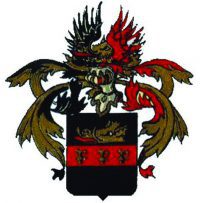
The Stoop Fund has existed since 1731 and was founded by Mr Dirk Hubert Stoop. On his death on 21 January 1731 he bequeathed, in accordance with his will of 1726, a sum of 2,000 florins (in bonds) for the benefit of “material support to needy descendants” of his parents, Nicolaas Stoop and Margaretha de Veer, or, as the will states: ‘de arme vrinden van het geslagte Stoop en de Veer’ (the poor kin of the Stoop and de Veer family).
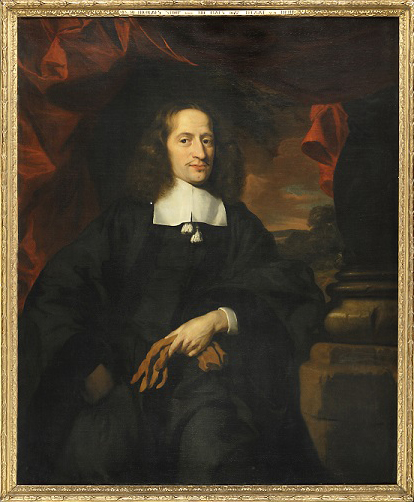
We always remember Mr Dirk Hubert Stoop, founder of the Fund, but at least as important to the Fund were the founder’s parents: Nicolaas Stoop and Margaretha de Veer. Their portraits are shown below:
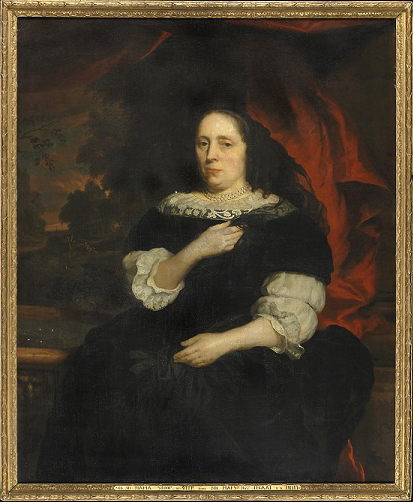
Because Dirk Hubert died childless, the line concerns the offspring of his brothers and sisters. After two generations only one descendant remained: Margaretha Arnoudina Van der Heim-Gevaerts (1728-1793). She had nine children. Many of these children remained childless or their families died out, after which, at the beginning of the 19th century, three “branches” remained, namely branch A, Van Lynden; branch B, Van der Borch; and branch C, De Bassecour Caen. From those three branches the number of descendants has since grown considerably. Today, as far as is known, there are about 800 people descended from Nicolaas Stoop and Margaretha de Veer.
It was the “will and desire” of his parents that Dirk Hubert Stoop set down in his will of 20 June 1726:
(Extract from the will of Mr Dirk Hubert Stoop, dated 20 June 1726.)
“Wijders soo begeert hij Heer Compt. nog dat de revenuen en het Capitaal selfs van seekere obligatien van twee duysent guldens ten laste van Gemeeneland van Holland ten comptoire van Dordregt, ten name van D:A:V:T:G:V:S:E:D:V: fo. 565 en van dato den 2 Januarij 1696, omme te voldoen de wille en begeerte van zijn Hr Compts ouders zal moeten blijven geaffecteerd tot subsistentie sooverre het strecken kan van de arme vrinden van het geslagte van Stoop en de Veer, sullende de voors. obligatien zijn onder de Custodie van de Heer Nicolaas Stoop hiervoren gemelt.” (Excerpt from the original 1726 will, retained here in its historical wording.)
When Dirk Hubert died in 1731, the Dordrecht bonds in question, worth 2,000 guilders, came “into the custody” of his nephew Nicolaas Stoop.
When Nicolaas died childless in 1750, the documents passed to his niece Margaretha (Maria) Arnoudina Gevaerts and her husband Jacob van der Heim. It then emerged that from 1731 to 1750 Nicolaas and his widow had given “no account” of the revenues of the bonds. When asked about this, the widow replied “that they had been used ad pios usus (for pious purposes)”.
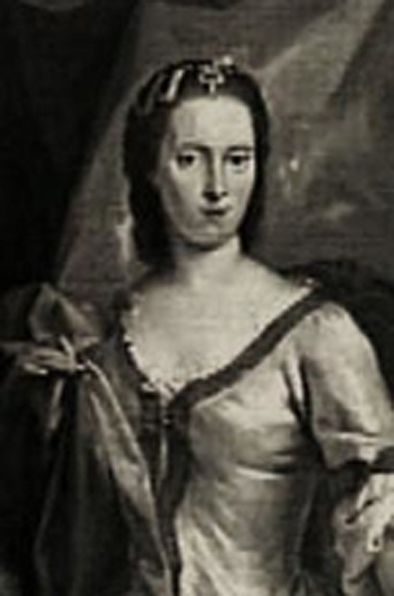
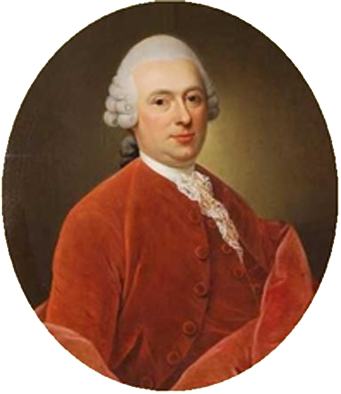
Mr Jacob van der Heim is the first (administrator) to manage the documents as a separate estate. He died in 1799. His seven heirs drew up an overview of the legacy and placed its management in the hands of their brother Mr Paulus van der Heim. At that point it amounted to 4,700 guilders at 2.5% interest. On the death of Paulus van der Heim in 1823, his brother Anthony van der Heim took over. By then the capital stood at 19,200 guilders. Anthony managed to increase it to 25,300 guilders by his death in 1831.
It appears that Jhr Mr Benedictus van den Velden, married to a daughter of Paulus, was the next administrator. In 1835 the fund held 35,000 guilders. In that same year A. van der Heim van Duijvendijke wrote “a proposal for arrangement and permanent administration”. This resulted in “The agreement of 1838”, in which thirteen descendants from the van der Heim family and their in-laws had it recorded before a notary that a separate administration of the legacy was to be maintained, and that “poor kin of the Stoop family” meant exclusively descendants of the Stoop-de Veer couple. This was to fend off various attempts by members of the (large) Stoop family to lay claim to the fund as well. Commissioners and an Administrator were also appointed. Ten handwritten copies of this agreement were made. The first statutes!
These lasted until 1908, when the “Draft regulation for the Administration of the Fund” followed.
In 1905 the first application for support was made; in other words, from 1731 to 1905 no payment had been made in line with the founder’s purpose. In 1897 “the undersigned Commissioners of the Stoop Fund considered it, in connection with various proposals made for the distribution of or disposal over part of the income, undesirable to leave the ever-increasing interest continually unused”. This was perhaps under pressure from the fact that, from 1883 onwards, voices arose to divide the Fund among the descendants.
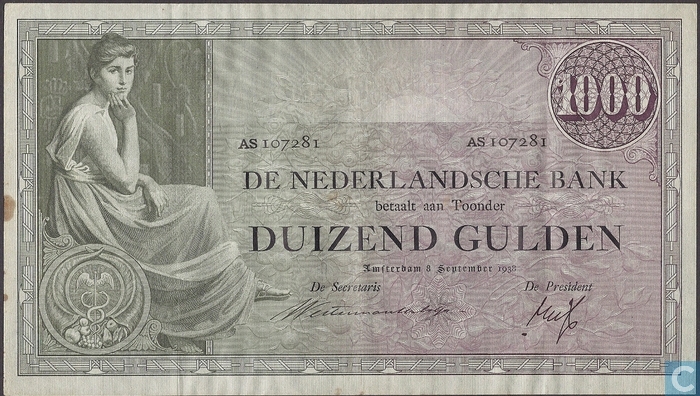
Well then: from 1908, all male descendants received as much as 500 guilders a year for 5 years as a study contribution. Female descendants received 2,000 guilders on marriage. The unmarried female descendant who was studying was thus poorly served. Whenever money remained beyond the above payments, it was to be used to improve the social position of other descendants.
In 1959 the foundation “Stichting genaamd Fonds gesticht door Mr Dirk Hubert Stoop” was established, and the concepts of support (onderstand) and study grant (studietoelage) as we know them today came into being.
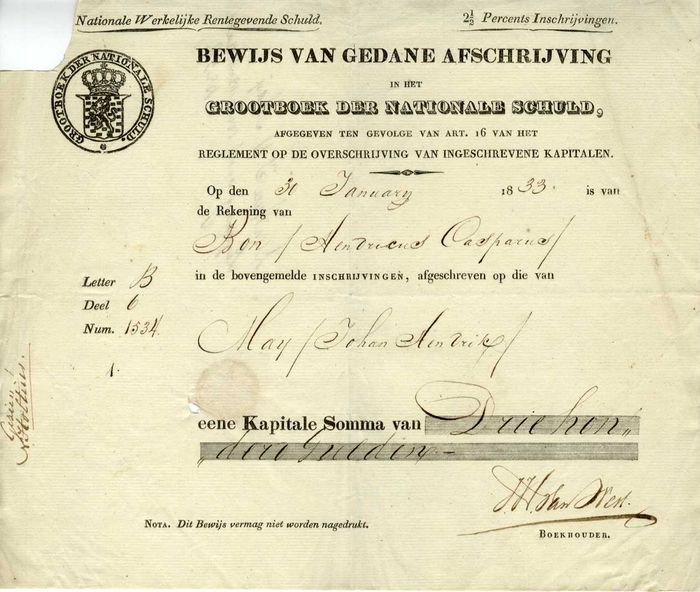
Whereas from 1731 onwards investment was always made in the so-called Grootboek Nationale Schuld (National Debt Ledger), that course was abandoned in the 1970s when, at the instigation of the treasurer of the time, the fund began investing in shares as well as bonds. The size of the assets was then about 700,000 guilders.